What does preserved moss wall art need to stay looking good?
Low maintenance, but not no maintenance
Preserved moss wall art offers a way to bring greenery indoors without the watering, pruning, or sunlight demands of live plants. The moss has been treated to replace its natural moisture with a plant-based glycerin solution, which keeps it soft and green for years. But that treatment does not make it indestructible. A few basic conditions and occasional care determine whether it stays attractive for the long term.
Unlike artificial plants that collect dust and look fake up close, preserved moss keeps a natural texture and color when treated right. The key is understanding what the preservation process does and what it does not protect against. The moss is no longer alive, so it will not grow or rot, but it can still fade, dry out, or become brittle if placed in the wrong spot or ignored entirely.
Light: indirect and steady
Preserved moss wall art needs indirect light. Direct sunlight, especially through a south- or west-facing window, will cause the color to fade within months. The glycerin-based preservation retains the green pigments, but UV light breaks them down over time. A wall that gets morning sun or filtered daylight is ideal. North-facing rooms or spaces with artificial lighting also work well, as long as the light is not harsh.
If the piece is in a room with strong sunlight, consider a sheer curtain or repositioning it to a wall that does not receive direct rays. Fluorescent or LED lights are fine; they emit almost no UV. Incandescent bulbs give off some heat, but the effect is negligible if the fixture is not inches away. The goal is to mimic the understory of a forest, where the moss would naturally grow in dappled shade.
Humidity and moisture: stable is better than damp
A common misunderstanding is that preserved moss needs misting. It does not. The preservation process replaces the water with a hygroscopic solution that draws a small amount of moisture from the air, keeping the fronds supple. Adding water can cause the glycerin to leach out, leading to mushy spots or mold growth. The moss should stay dry to the touch.
That said, very dry air will make the moss brittle over time. If you live in a desert climate or run heating or air conditioning that dries out a room, the moss may start to feel stiff or shed tiny particles. A room with normal indoor humidity, between 40 and 60 percent, is fine. If the air is extremely dry, a nearby humidifier set to a moderate level helps, but direct misting is not needed. Bathrooms and kitchens can work if the moss is not directly above a steamy shower or stovetop. Occasional steam exposure is okay, but constant dampness can soften the backing board or cause the adhesive to fail.
Dust removal: gentle and regular
Dust settles on preserved moss just as it does on any surface. Over time, a layer of dust dulls the color and makes the piece look tired. The fix is simple and does not require special tools. Use a soft, dry paintbrush, a makeup brush, or a hairdryer on the cool and low setting to gently lift dust from the fronds. For larger pieces, a microfiber cloth lightly dragged across the surface works, but avoid pressing hard because the moss is delicate.
Compressed air, like the kind used for cleaning electronics, can blow dust out of crevices. Hold the can upright and keep the nozzle a few inches away to avoid propellant residue. Do not use water, cleaning sprays, or any liquid. The moss will absorb the liquid and the glycerin balance will be disturbed. If a spot gets stained, leave it alone; most stains are not removable without damaging the moss. Prevention is better: keep the piece away from kitchens where grease can settle, or from rooms where smoke or candle soot is present.
Color stability and fading
High-quality preserved moss stays green for several years, but some fading is natural. The rate depends on light exposure, air quality, and the original dye quality. Most preserved moss is dyed after preservation to achieve a consistent, vibrant green. Over time, that dye can break down, especially if the moss is in direct sunlight. The moss will not turn brown like dead moss, but it may shift to a lighter or more yellow-green shade.
To slow fading, keep the piece out of direct UV. If the room has large windows, consider UV-filtering film on the glass. Fluorescent lights with high UV output are rare in homes, but if the piece is under a strong halogen spotlight, the heat and light will accelerate fading. LED spotlights are a safer option. If the piece is near a window, rotate it occasionally so the fading is even, though this only matters if you plan to keep it for many years.
Interior styling and placement
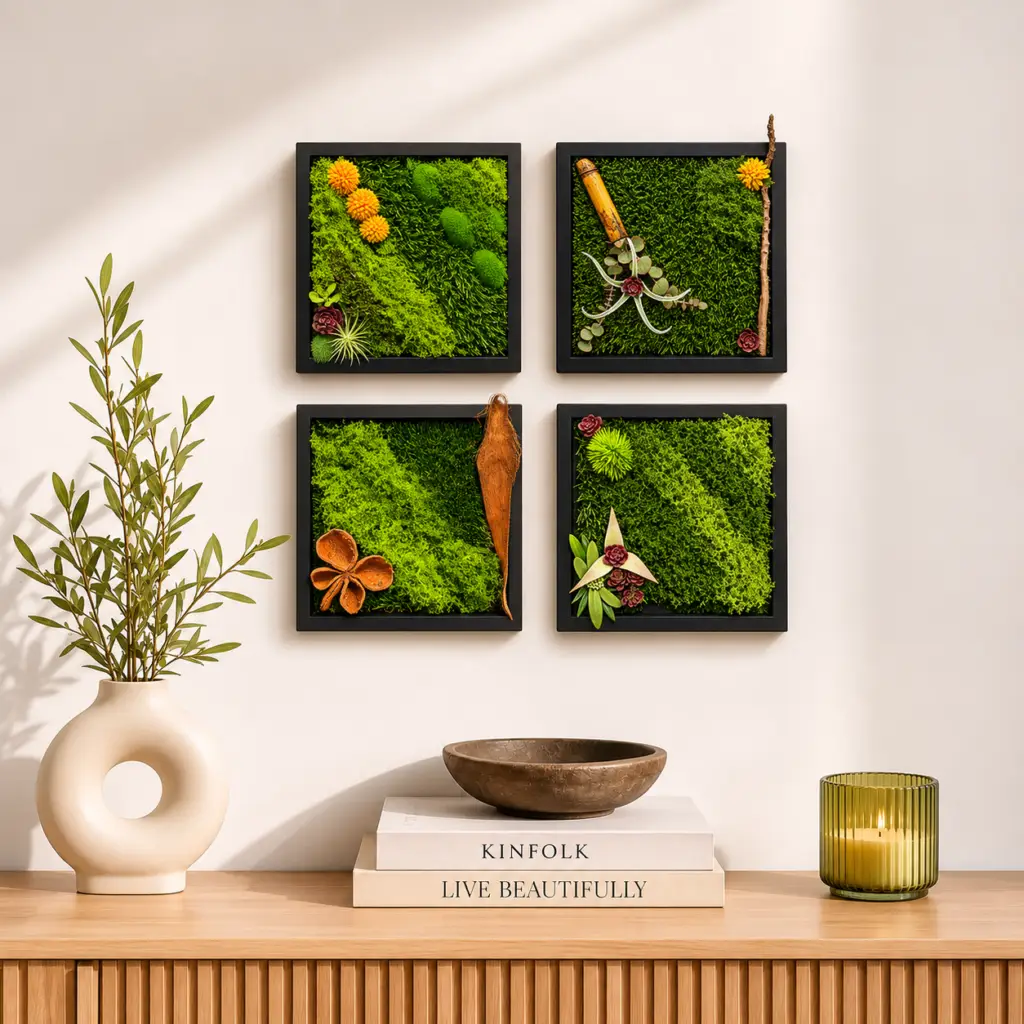
Preserved moss wall art fits naturally into interiors that emphasize natural materials and a neutral palette. The green of the moss works as a textural anchor, breaking up flat wall surfaces without adding visual clutter. It pairs well with wood, stone, linen, and other organic finishes. Many people use it in living rooms, home offices, or entryways where they want a calm natural accents for rooms that might otherwise feel sterile or busy.
Because the moss is preserved, it can go in places where live plants would struggle, like a dark hallway or a north-facing corner. It does not need to be near a window, so it works in interior bathrooms or windowless offices. The backing is usually a lightweight board or frame, so hanging is straightforward with a standard picture hook or two. Just make sure the wall is dry and the piece is level, because a tilted frame can cause dust to collect unevenly.
Avoiding common mistakes
The most common cause of a preserved moss piece looking bad is placement in direct sun. The second is people trying to clean it with water or spray cleaners. The third is handling it roughly; the moss can shed small bits if brushed too hard or if the adhesive holding it to the backing weakens. If the moss starts to shed, it is usually a sign the piece is old or was stored in a very hot or very dry space. There is no effective home repair for shedding, because the adhesive is set during manufacturing.
Another mistake is mounting the piece on an exterior wall that gets cold in winter. Condensation can form behind the frame, and the moisture can seep into the backing, causing warping or mold. If the wall is prone to dampness, leave a small gap between the frame and the wall, or choose an interior wall instead. The same applies to walls above radiators; heat rising directly onto the moss will dry it out faster.
Long-term outlook
With reasonable care, preserved moss wall art can last five to ten years before it starts to look noticeably faded or worn. The backing and frame may need replacing if they get damaged, but the moss itself, if kept out of sunlight and away from moisture, stays presentable for a long time. Some people choose to refresh the color by having the piece professionally re-dyed, but that is not a DIY job. For most people, the piece is simply enjoyed until it naturally reaches the end of its life, then replaced.
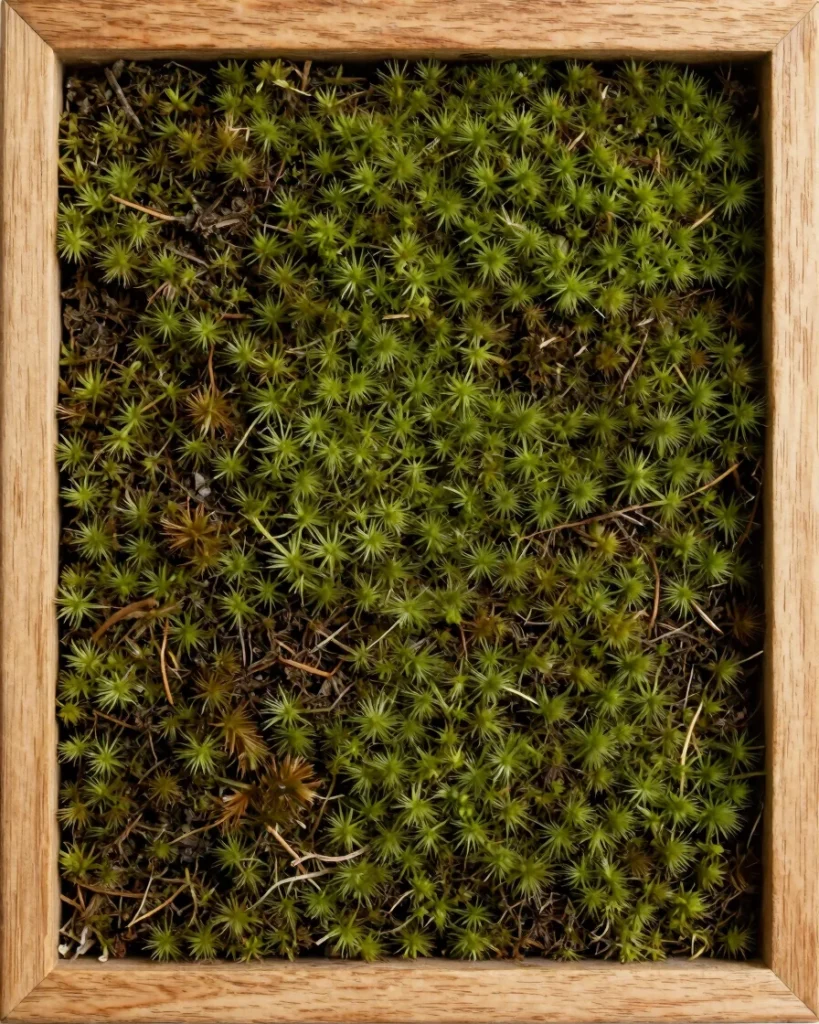
The moss does not require the kind of commitment that a live plant wall demands. It will not die if you go on vacation or forget about it for a month. But it does reward a little attention: a quick dusting every few weeks, a check that it is not in a spot where sunlight hits it directly, and keeping it away from humidity extremes. Those simple habits keep the moss looking as fresh as the day it was installed, and they cost almost no time or money.
For anyone who wants the visual payoff of greenery without the upkeep of a garden, preserved moss offers a realistic alternative. It brings texture and a sense of quiet into a room. When placed thoughtfully and dusted occasionally, it serves as one of those calm natural accents for rooms that need a focal point without shouting. The moss does not demand much, but what it does ask for is easy to give.